Description
Designed to study the functioning, simulation and troubleshooting of a modern computer.
Can be used when conducting laboratory work in the courses “Informatics”, “Repair and maintenance of computer equipment” and in laboratory workshops of other educational courses studying the design and repair of computer equipment in higher, secondary and vocational educational institutions.
Compound:
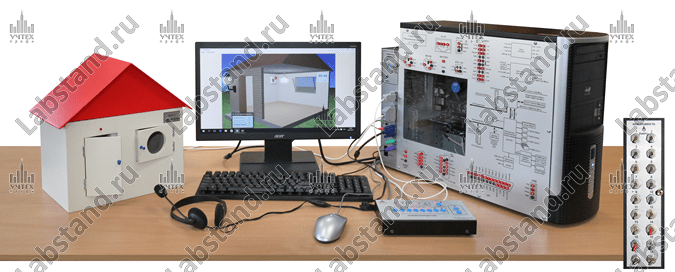
— a simulator unit based on a PC system unit (no worse than Intel (2 cores, 1600 MHz) / 60 GB/2024 MB storage device), a panel with a functional diagram and control points for signal output, a fault input unit, an audio generator of triangular and rectangular signals with adjustable frequency;
— input/output device for COM port and USB;
— an object managed and monitored via an LPT port;
— monitor at least 18.5”, keyboard, mouse, microphone and telephone headset;
— WIN OS, test programs, operating instructions;
— methodological recommendations for conducting practical and laboratory work (4 works at a basic level, 8 works at an increased level of complexity).
Specifications:
— the number of control points for studying the computer circuit — at least 50;
— all signals at control points are buffered or protected;
— number of entered faults — 16 pcs.;
— supply voltage 220 V, 50 Hz;
— power consumption no more than 500 W;
— weight, no more than 20 kg.
* Additionally, an oscilloscope can be supplied (analog OSU-20, digital GDS-71072, AKIP-4115/3a), which is necessary for working with the stand, but is not included in the basic delivery package.